

The Institute for Theological Encounter with Science and Technology
Presents the Webinar
Are Miracles Feasible from the Standpoint of Contemporary Science?
This one-hour webinar will be held on Saturday, December 12, 2026, at the following times:
9 am Pacific
10 am Mountain
11 am Central
Noon Eastern
Our presenters
Dr. José Luis Fernández
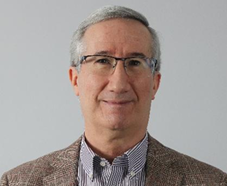
José Luis Fernández has over 40 years of professional experience on national and international projects, serving as a researcher, systems analyst, senior engineer, coordinator, department head, and consultant. His expertise spans air traffic control systems, avionics, data acquisition and industrial control systems (SCADA) for thermal and nuclear power plants, air navigation aids, mobile applications, home and building automation, and medical devices. Until 2018, he was a tenured professor at the ETSI Industriales (UPM) in Madrid. He is the lead author of the book “Practical Model-Based Systems Engineering” (Artech House, 2019) and has authored numerous book chapters, articles, and conference papers. For more than 40 years, he has studied the image on the Shroud of Turin, writing articles on the subject and participating in conferences in Spain, the United States, and Italy. He is a Catholic Scientists member, an IEEE Senior Member, and an active member of INCOSE and PMI, where he participates in drafting and reviewing professional guidelines.
Abstract
The Catechism of the Catholic Church defines a miracle as a “sign or a prodigy, such as a healing or the control of nature, which can only be attributed to divine power. The miracles of Jesus are messianic signs of the presence of the kingdom of God” (Catechism 547). So, the most important characteristic of a miracle is divine intervention, not the violation of natural laws, as Hume defended, which need not be the case.
In this presentation, I defend that the best description of many natural phenomena today is one based on complex adaptive systems rather than mechanistic, deterministic systems. This paradigm draws upon various fields, ranging from Shannon’s information theory, Wiener’s cybernetics, and von Bertalanffy’s general systems theory to the study of chaotic systems.
These complex systems exhibit emergent properties that resemble miracles, except for the element of divine or supernatural agency, which, in the case of a miracle, can be viewed as another type of interaction with the natural system, which might itself be a human being.
Webinar resources
- Conference about Miracles in Spanish presented at a summer course held by CEU University at El Escorial (Madrid, Spain) July 2025. To watch, click here.
- Slides about Miracles in English at Academia.edu. To view, click here.
- “Practical Model-Based Systems Engineering,” Artech House, Boston, MA, 2019.
- “Why the Shroud of Turin is not a medieval work? An argument map.” Scientia et Fides, 2024.
- “A Systematic Approach for Understanding the Image Formation on the Turin Shroud.” Third International Dallas Conference on the Shroud of, 2005.